
Surnames and Genetics
In many societies a surname is passed from father to children, just as the Y chromosome is passed from father to son. That parallel is what makes surname DNA studies possible.
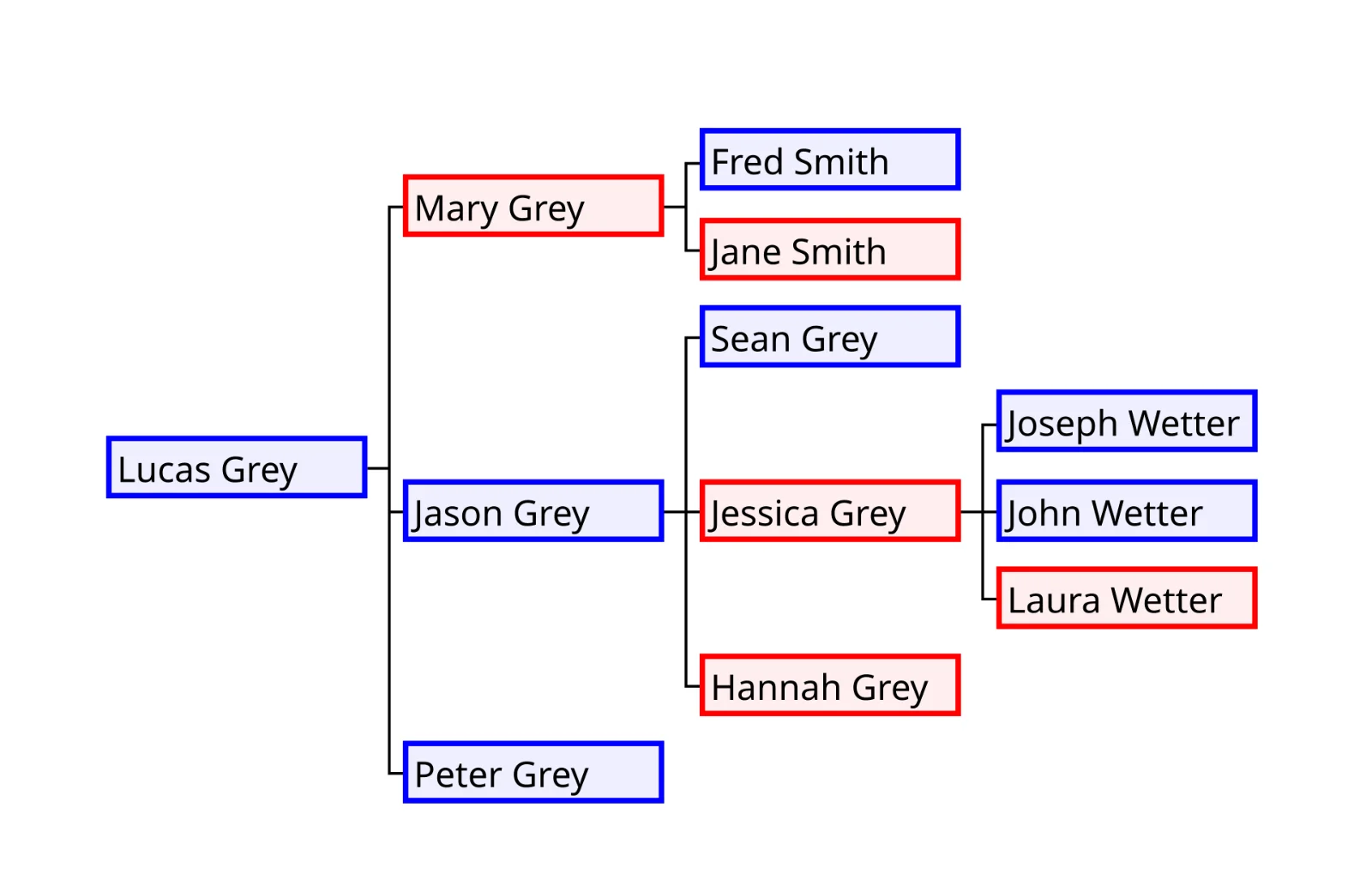
An old idea
Interest in surnames and heredity is older than DNA testing. As the history on Wikipedia notes, in 1875 George Darwin, a son of Charles Darwin, used surnames to estimate how often first cousins married. In 2000 the geneticist Bryan Sykes published a study of his own surname using four Y-chromosome markers, an early sign that genetics could help genealogists.
What a surname study can show
- Whether people sharing a surname descend from a single founder or from several unrelated men.
- Which branches belong together when documents run out.
- Where a non-paternity event — an adoption, a name change or a child taking a different name — has broken the link between name and Y chromosome.
One name, many origins
Surnames arose at different times and in different ways — from places, occupations, nicknames or a father’s name — so a common name may have started independently in many places. Rare names are more likely to trace back to a single family, which is why they often make the clearest studies.
Limits
A Y-DNA match shows that two lines share a paternal ancestor, not who that ancestor was or when he lived. Documentary research is still needed to turn a genetic link into a family tree.
Read more about the different kinds of DNA projects.